
Introduction
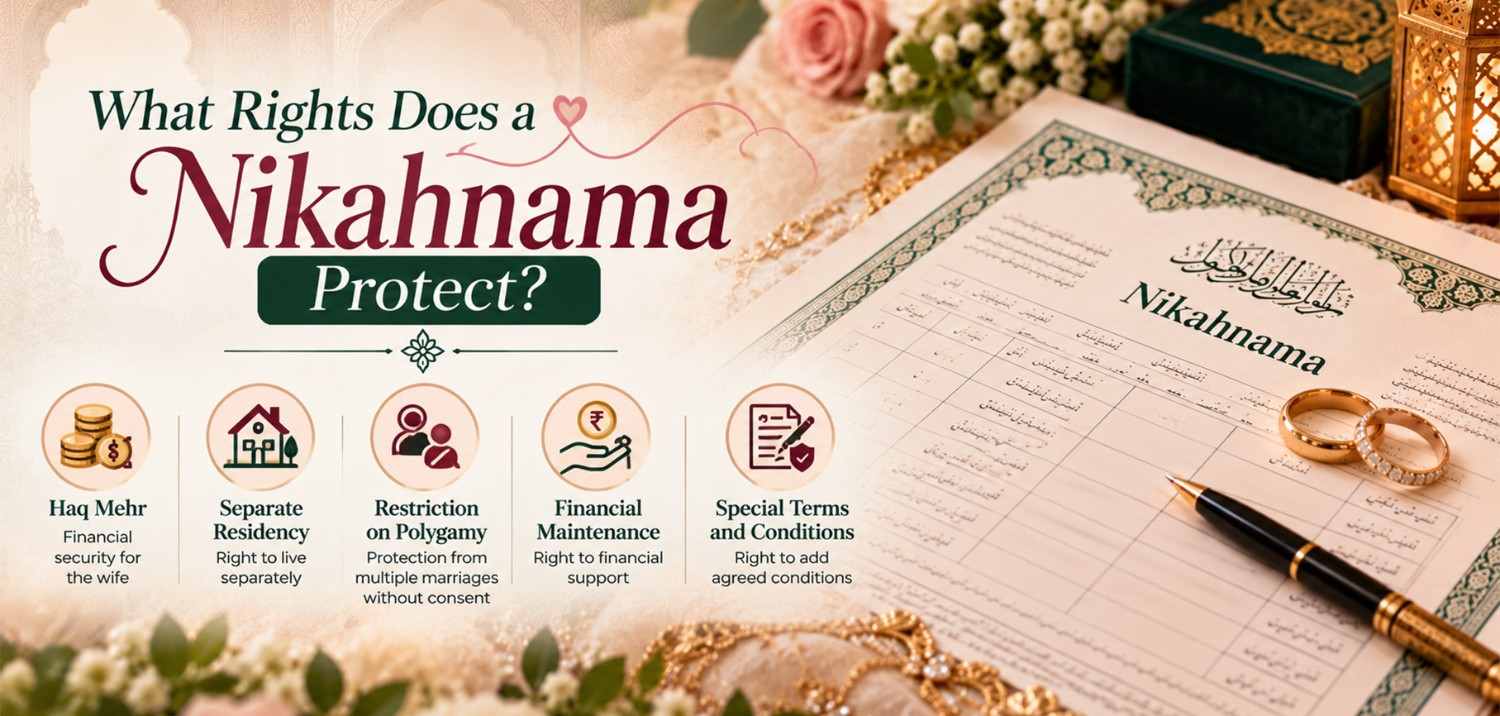
Nikahnama is the most important piece of paper that, without it, your marriage does not exist in the eyes of Pakistani law, as it records the solemnisation of marriage, including marital terms, financial commitments and agreed conditions.
Understanding nikahnama before signing is important for couples to define their rights, duties and financial protections. This blog will help you understand what rights a nikahnama protects and what you should check before signing a nikahnama.
What is a Nikahnama and Why Is It Important?
The nikahnama is a legal and religious binding marriage contract in Pakistan under the Muslim Family Laws Ordinance, 1961. Nikahnama is not just a formality. It is evidence that you are legally registered while fulfilling the Islamic requirements of a marriage contract. It provides a record for all legal, financial and government purposes.
This document contains 25 columns recording the agreed terms and conditions of both the bride and the groom. Columns 1-12 contain basic information about the venue, bride, groom, guardians and witnesses, while columns 13-22 record the couple’s rights and columns 23-25 include the signatures or thumbprints.
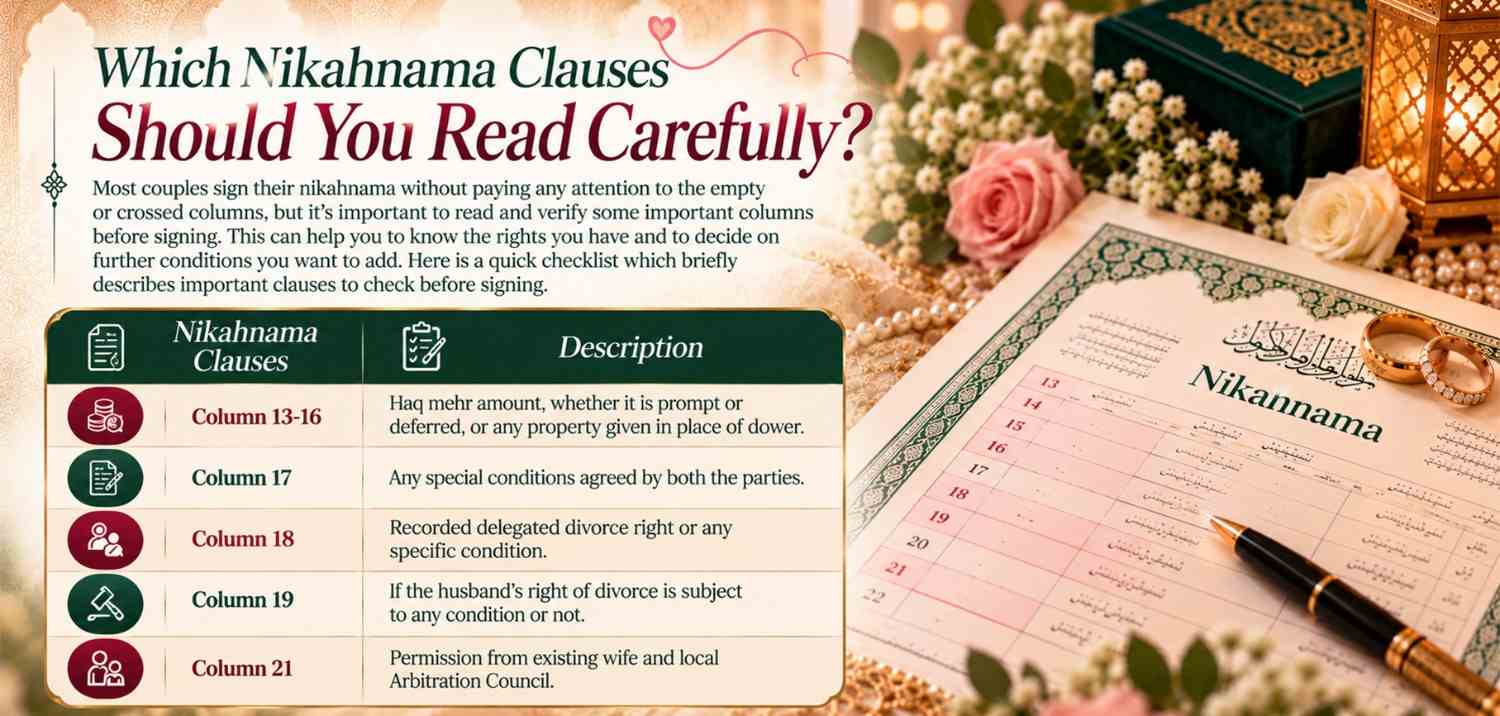
Which Nikahnama Clauses Should You Read Carefully?
Most couples sign their nikahnama without paying any attention to the empty or crossed columns, but its important to read and verify some important columns before signing. This can help you to know the rights you have and to decide on further conditions you want to add. Here is a quick checklist which briefly describes important clauses to check before signing.
|
Nikahnama Clauses |
Description |
|
Column 13-16 |
Haq mehr amount, whether it is prompt or deferred, or any property given in place of dower. |
|
Column 17 |
Any Special conditions agreed by both the parties |
|
Column 18 |
Recorded delegated divorce right or any specific condition |
|
Column 19 |
If the husband’s right of divorce is subject to any condition or not |
|
Column 21 |
Permission from existing wife and local Arbitration Council |
How to Register Your Nikahnama and Get a Certificate?
After you have signed the document, you have to register your nikahnama with the local union council first and then apply for a computerised marriage certificate to get an official Marriage Registration Certificate (MRC). Documents required for registration include:
- Nikahnama (Original and a copy)
- CNIC of bride
- CNIC of Groom
- CNIC of nikah khawan
- CNIC of witnesses
- Passport Copies (if either of the couple is a foreigner)
What are the Common Mistakes to Avoid When Signing a Nikahnama?
Leaving blank or crossed columns, vague haq mehr details and ignoring council registration are some of the common mistakes when signing a nikahnama. Understanding and avoiding these common mistakes can help you get an authorised nikahnama with your reserved rights.
- Signing blindly without reading anything, especially by the bride
- Leaving haq mehr details incomplete due to family understanding
- Ignoring crossed-out column 18 that nobody explains
- Adding incorrect personal information such as name, CNIC or address
- Assuming nikah automatically means registration
Frequently Asked Questions About Nikahnama
Can I register my nikah online?
Yes, you can register your nikah digitally depending on your location and how the ceremony is conducted. NADRA has introduced a digital marriage registration service in Pakistan.
Is nikah valid without a mehr?
Yes, a nikah is valid even if the haq mehr is not mentioned or agreed upon at the time of the ceremony because mehr is a right, not a pillar to validate the nikah.
Can I check my marriage status online?
Yes, you can check your marriage status online in Pakistan by using the Pak Identity Web Portal managed by NADRA.
Conclusion
Nikahnama is a religious and legally binding document which records the rights of both the husband and the wife at the time of marriage. This contract acts as evidence that you are a legally registered couple while following Sharia rules.
Nikahnama provides you with the right to maintenance, haq mehr, delegated divorce, polygamy and any specific conditions you want to add. Are you planning your nikah ceremony? Explore Peony Events Planner for wedding planning and décor services so that you can focus on your nikahnama.